
When someone you love is having a mastectomy, the instinct to help is immediate. What that help should actually look like is less obvious. Recovery has its own rhythm, and the most useful support often comes from practical preparation rather than guessing in the moment.
Here’s a checklist for getting ready, along with how to help without taking over.
What Does Recovery Actually Look Like in the First Few Weeks?
Recovery varies by procedure and by person, so your loved one’s surgeon is the best source for what to expect specifically. In general terms, the first weeks often involve lifting restrictions on the affected side, fatigue that can be more significant than expected, and in some cases a surgical drain that needs monitoring and emptying.
Knowing the general shape of recovery helps you prepare, but the specifics, timelines, and restrictions should come from their care team, not general assumptions.
What Should You Have Ready at Home Before They Return?
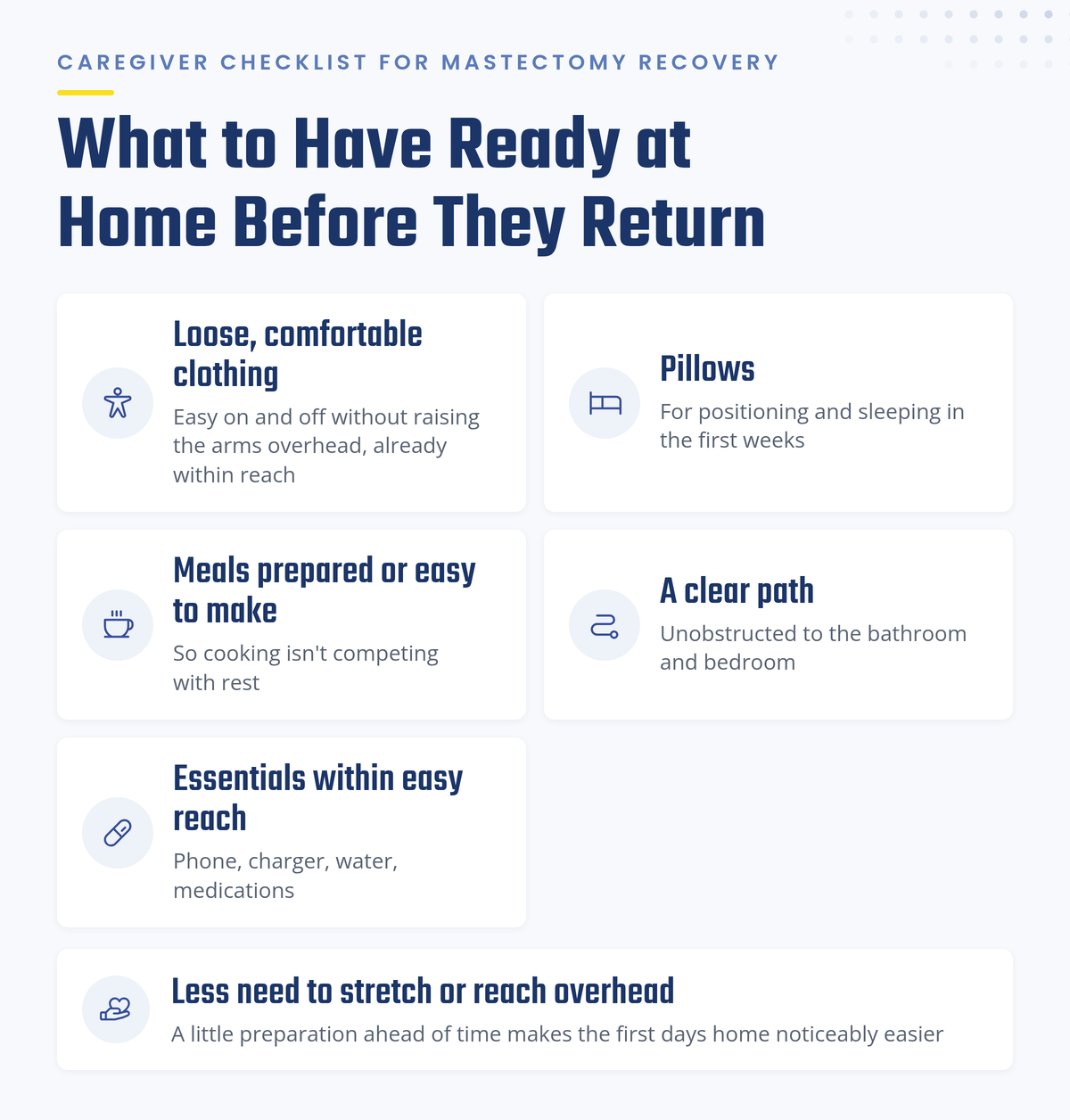
A little preparation ahead of time makes the first days home noticeably easier:
- Loose, comfortable clothing that’s easy to get in and out of without raising the arms overhead, already within reach rather than in a closet that requires stretching.
- Pillows for positioning and sleeping, since finding a comfortable sleeping position often takes some adjusting in the first weeks.
- Meals prepared or easy to make, so cooking isn’t competing with rest during early recovery.
- A clear, unobstructed path to the bathroom and bedroom.
- Essentials within easy reach: phone, charger, water, medications, so there’s less need to stretch or reach overhead.
If a post-surgical kit hasn’t already been put together, our guide on what to have ready before surgery covers what’s typically included.
How Can You Help With Daily Tasks Without Taking Over?
This is often the hardest balance to strike. Some tasks genuinely need help in the first weeks, especially anything involving lifting, reaching overhead, or driving. Others, your loved one may want to keep doing themselves, even if it takes longer or looks harder than you’d like.
Asking directly, “what would actually be helpful right now,” tends to work better than assuming. Independence matters to recovery too, not just physical healing.
What Should You Watch For?
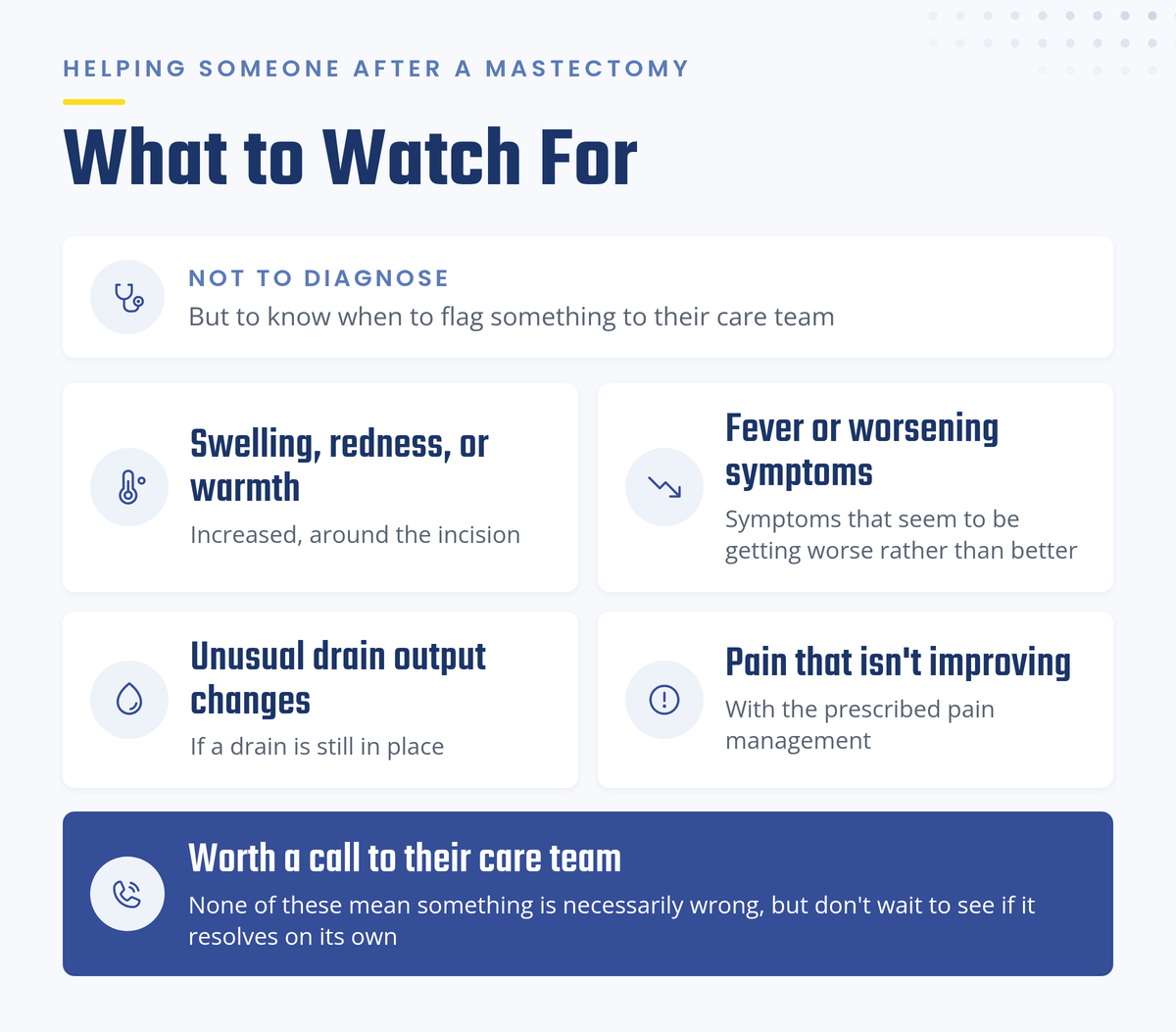
Pay attention to how things are progressing, not to diagnose anything yourself, but to know when to flag something to their care team. Worth mentioning if you notice:
- Increased swelling, redness, or warmth around the incision
- Fever or symptoms that seem to be getting worse rather than better
- Unusual changes in drain output, if a drain is still in place
- Pain that isn’t improving with the prescribed pain management
None of these mean something is necessarily wrong, but they’re worth a call to their care team rather than waiting to see if it resolves on its own.
How Can You Support the Emotional Side of Recovery?
Physical recovery gets most of the attention, but the emotional side is real too, and it doesn’t always follow the same timeline as physical healing. Some people want to talk through it. Others don’t, at least not right away. Following their lead, rather than assuming how they should feel, tends to matter more than saying the right thing. Our guide on emotional recovery after a mastectomy goes deeper into this side of things, and may be worth reading together.
What About Appointments and Logistics?
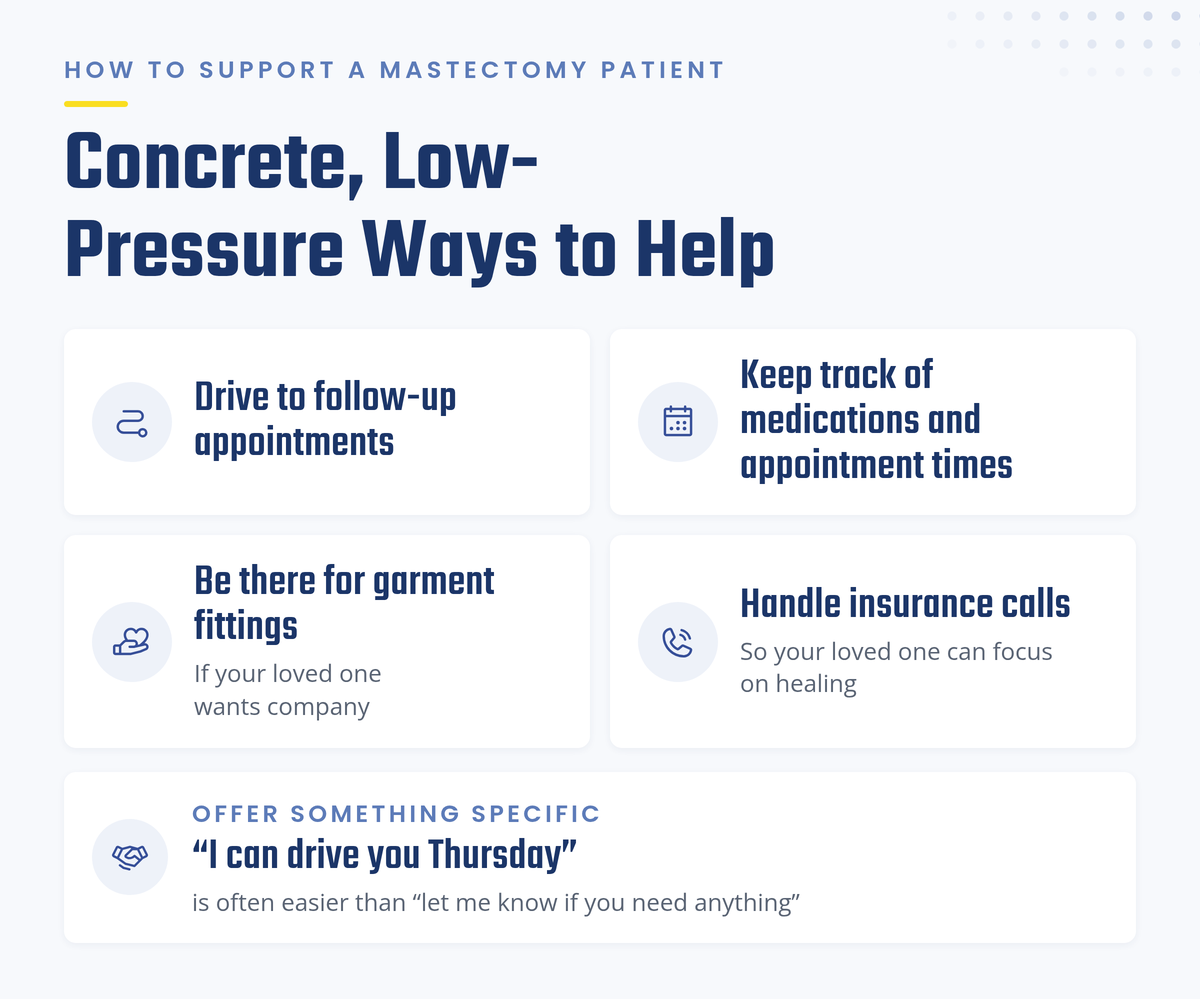
Offering to drive to follow-up appointments, helping keep track of medications and appointment times, and being available for garment fittings if your loved one wants company are all concrete, low-pressure ways to help. It’s often easier to offer a specific task, “I can drive you Thursday,” than a general one, “let me know if you need anything.”
Insurance paperwork often ends up on a caregiver’s plate too, since it’s one more thing competing for a recovering patient’s energy. Our guide on insurance coverage for post-mastectomy products covers what to ask and when to start that conversation, and it can be easier for you to handle those calls while your loved one focuses on healing.
How Do You Take Care of Yourself as a Caregiver?
Supporting someone through recovery is its own demand, physically and emotionally, and it’s easy to put your own needs last. It’s fine to ask for help too, whether that’s another family member taking a shift, or leaning on a hospital social worker for guidance on what support resources are available locally.
How Ozark Medical Equipment Can Help
Ozark Medical Equipment fits post-mastectomy garments and compression products, and caregivers are welcome to be part of that conversation, whether that means helping with questions during a fitting or just understanding what your loved one is adjusting to.
Want to Talk Through What Might Help?
Call 573-686-5510 to ask questions about garments, fittings, or support products as you help a loved one through recovery.
Frequently Asked Questions
How long does mastectomy recovery typically take?
This varies significantly based on the procedure, whether reconstruction was involved, and individual healing. Their surgeon can give a timeline specific to their situation.
Should I go with my loved one to garment fittings?
Many people appreciate the company, but it depends on what they’re comfortable with. It’s worth asking rather than assuming either way.
What if I notice something that seems concerning during recovery?
Don’t wait for a scheduled follow-up if something feels off. New swelling, fever, or worsening pain are worth a call to their care team in the moment.