
Somewhere in the middle of surgery decisions, recovery planning, and appointments, a practical question tends to come up: will insurance help pay for the garments and products that come after a mastectomy? It’s a fair question, and the answer is usually yes, at least in part, though the specifics depend heavily on your plan.
Here’s how coverage typically works, what’s often included, and what to ask before you buy.
Does Insurance Typically Cover Post-Mastectomy Products?
In many cases, yes. A federal law, the Women’s Health and Cancer Rights Act, requires group health plans that cover mastectomies to also cover breast prostheses and other items related to the surgery, when the plan already covers mastectomy care. Medicare and many private plans provide coverage as well.
That said, coverage doesn’t mean identical terms everywhere. How much is covered, how often, and what documentation is required varies by plan, so confirming your specific benefits is still a necessary step rather than something to assume.
What’s Typically Covered?
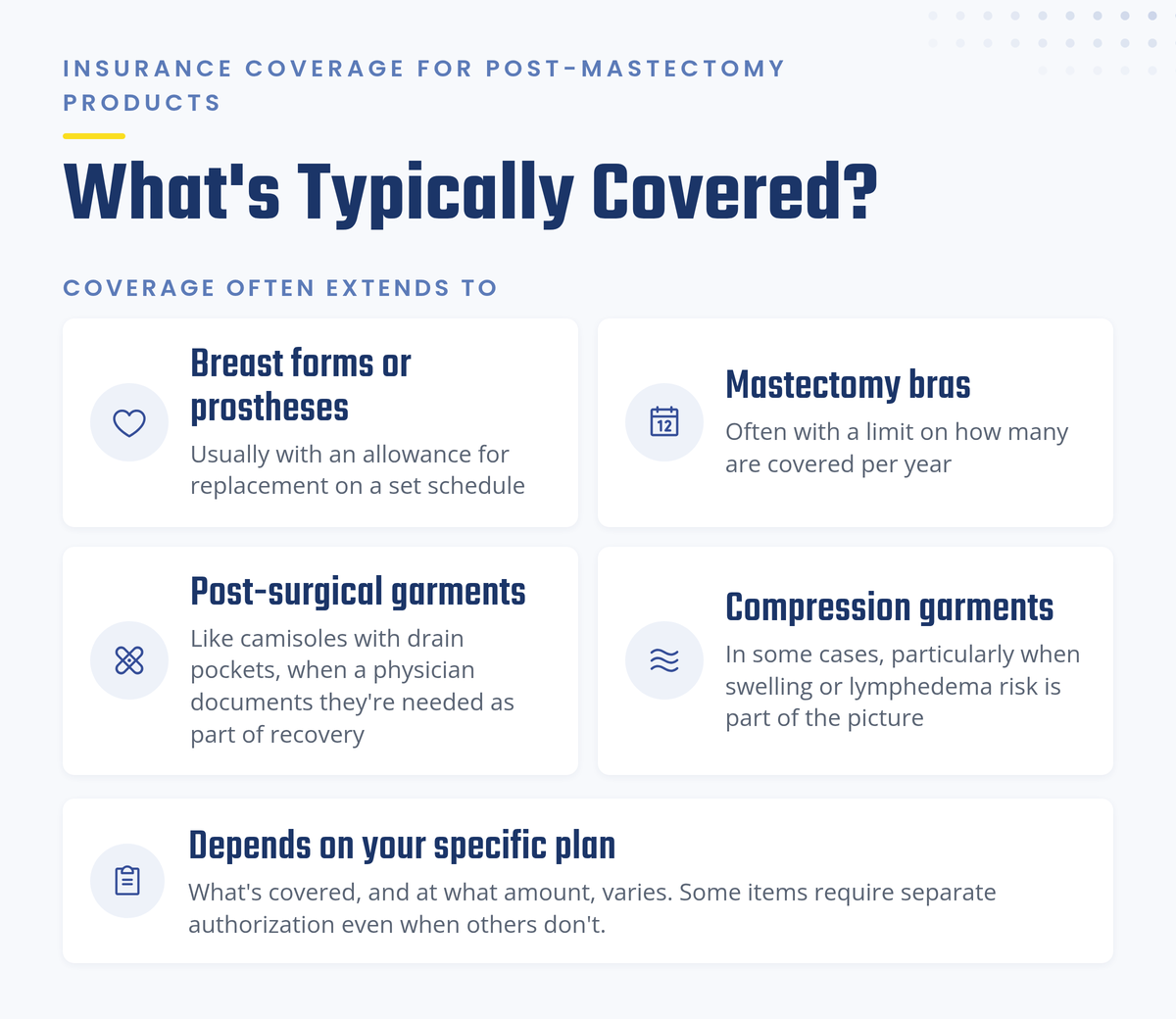
Coverage often extends to:
- Breast forms or prostheses, usually with an allowance for replacement on a set schedule.
- Mastectomy bras, often with a limit on how many are covered per year.
- Post-surgical garments, like camisoles with drain pockets, when a physician documents they’re needed as part of recovery.
- Compression garments, in some cases, particularly when swelling or lymphedema risk is part of the picture.
What’s actually covered, and at what amount, depends on the specific plan. Some items require separate authorization even when others don’t.
What Documentation Is Usually Needed?
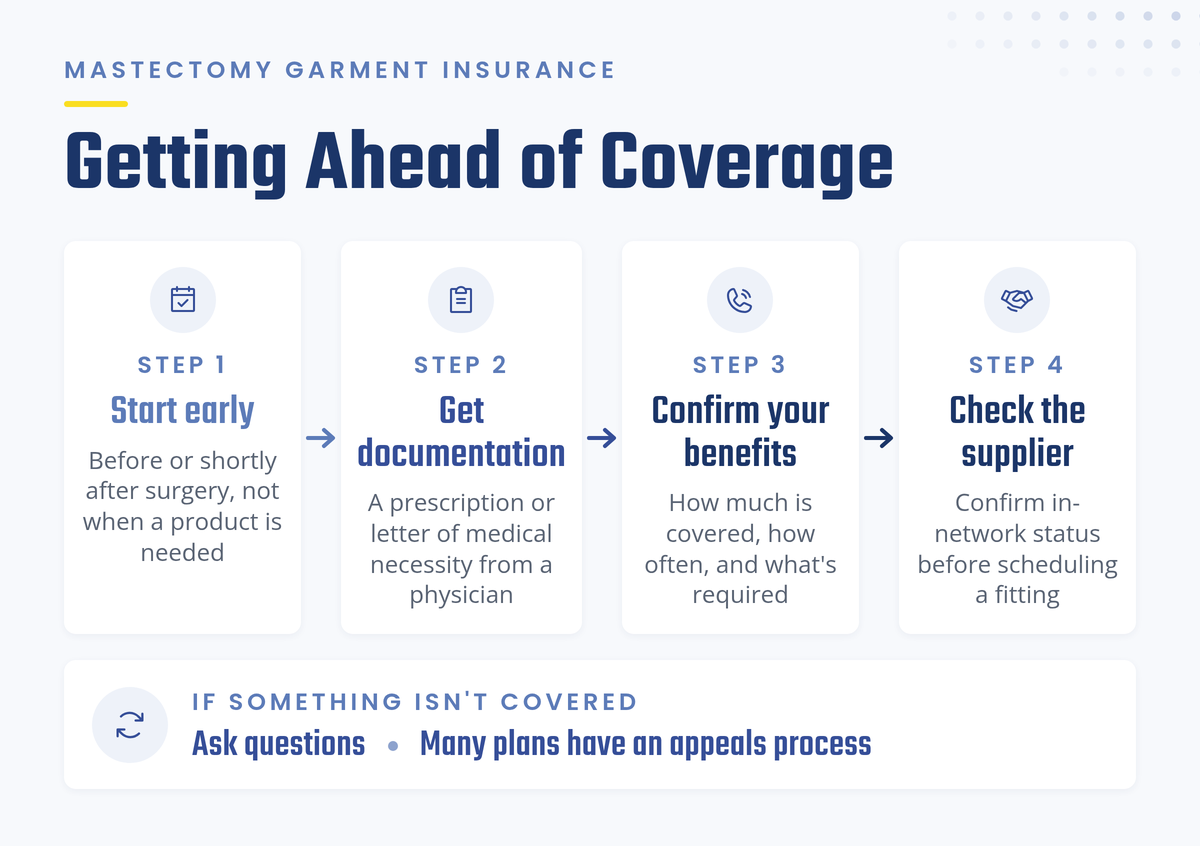
Most plans require a prescription or a letter of medical necessity from a physician before covering these products. Depending on the plan, specific diagnosis or procedure codes may also be required.
It’s worth requesting this documentation early, ideally before or shortly after surgery, rather than after a product has already been purchased.
Does Coverage Work the Same Under Medicare and Private Insurance?
Not exactly, though both generally provide some coverage. Under Original Medicare, breast prostheses are typically covered under Part B as a prosthetic device, usually with a 20 percent coinsurance after the Part B deductible is met, and replacement is generally reviewed on a set schedule rather than covered indefinitely without new documentation. Medicare Advantage plans administer these benefits differently from plan to plan, so it’s worth confirming specifics with the plan directly rather than assuming Original Medicare’s rules apply.
Private and employer group plans are generally required under the Women’s Health and Cancer Rights Act to cover mastectomy-related prostheses when the plan already covers mastectomy care, but the details, how many garments per year, which suppliers are in-network, whether prior authorization is required, are set by each individual plan rather than a single federal standard. Medicaid coverage varies more significantly still, since it’s administered at the state level, so confirming with your specific state Medicaid office is the most reliable way to know what’s included.
What Happens If You Switch Insurance Plans Mid-Recovery?
A job change, a new employer plan, or a shift to COBRA coverage can happen at any point, including during mastectomy recovery. If that happens, it’s worth confirming with the new plan whether previously approved documentation carries over or needs to be resubmitted, and whether your current supplier is still in-network. Reaching out proactively, rather than waiting until the next purchase is denied, tends to prevent a gap in coverage.
Does Coverage Extend to Replacements Later?
Breast forms and other garments wear out with regular use, and many plans account for this with a replacement schedule, often allowing a new prosthesis after a set period rather than only covering the first one. The same is sometimes true for mastectomy bras, though the specifics and timing vary by plan. If a product you already have is wearing out, it’s worth asking your insurance provider whether you’re due for a covered replacement rather than assuming you need to pay out of pocket.
What Questions Should You Ask Your Insurance Provider?
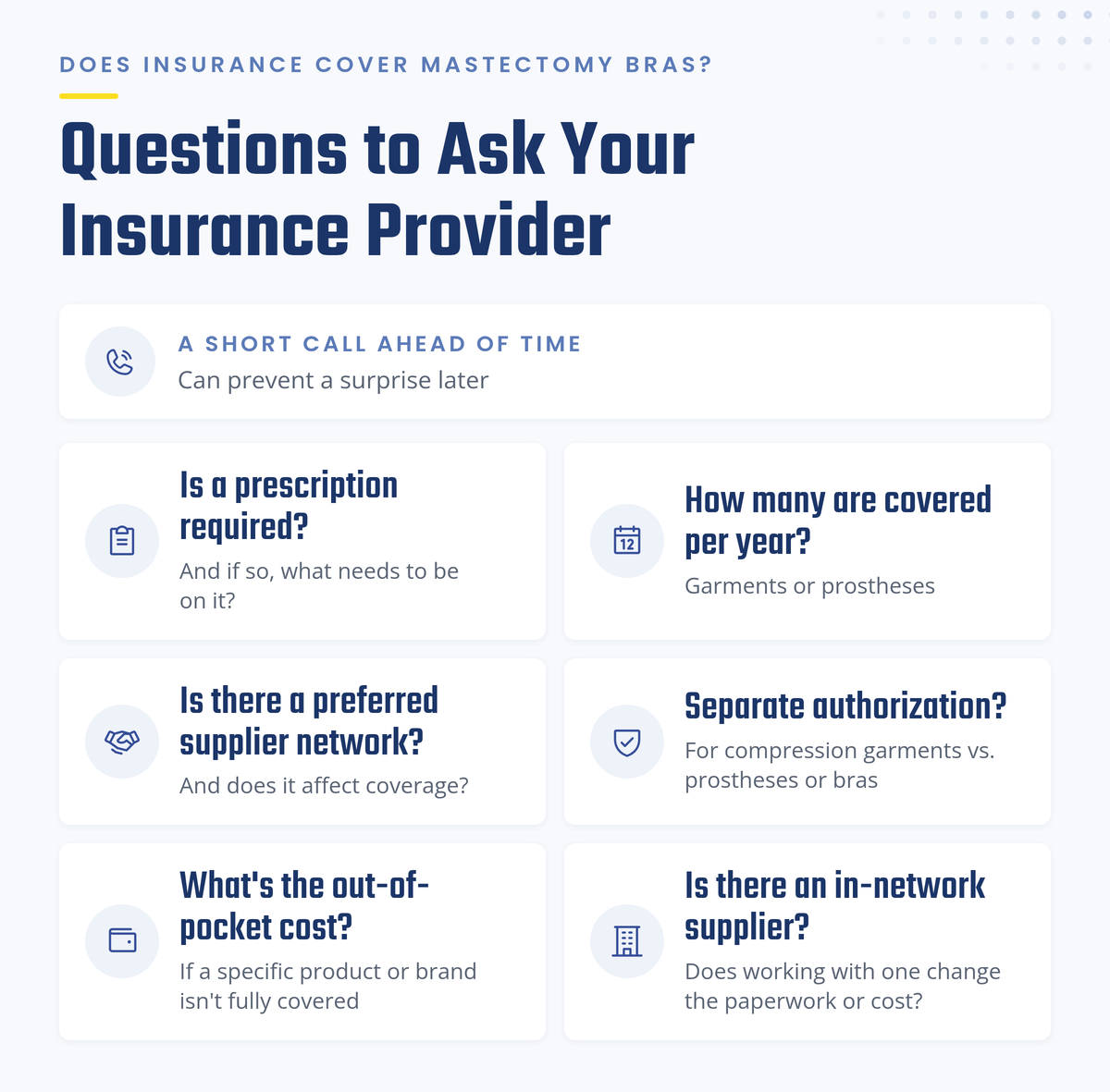
A short call ahead of time can prevent a surprise later:
- Is a prescription required, and if so, what needs to be on it?
- How many garments or prostheses are covered per year?
- Is there a preferred supplier network that affects coverage?
- Do compression garments require separate authorization from prostheses or bras?
- What’s the out-of-pocket cost if a specific product or brand isn’t fully covered?
- Is there an in-network supplier, and does working with one change the paperwork or cost?
Working with an in-network supplier, when your plan has one, generally means less paperwork and a more predictable cost. If you’re not sure whether a supplier is in-network, that’s worth confirming before scheduling a fitting rather than after.
Can You Use an FSA or HSA for What Insurance Doesn’t Cover?
If a product isn’t fully covered, or a deductible needs to be met first, many post-mastectomy items qualify as eligible expenses under a Flexible Spending Account or Health Savings Account. Checking with your plan administrator on what qualifies, and keeping documentation of medical necessity on hand, can make out-of-pocket costs easier to manage.
What If a Product Isn’t Covered?
If something isn’t covered, or isn’t covered at the amount expected, there’s usually room to ask questions rather than accept the first answer. Many plans have an appeals process, and a supplier familiar with mastectomy-related documentation can sometimes help identify what’s missing from a claim. Our guide on navigating medical equipment decisions without coverage covers how to think through next steps when insurance says no.
When Should You Start This Conversation?
As early as possible. Starting the insurance conversation before or shortly after surgery, rather than waiting until a product is needed, gives documentation time to be in place and avoids paying out of pocket for something that may have been covered.
How Ozark Medical Equipment Can Help
Ozark Medical Equipment works directly with insurance documentation for post-mastectomy products and can help confirm what’s likely covered before you purchase. If you’re still early in the process, our guide on post-mastectomy bras and our guide on what to have ready before surgery are useful next steps. And if you’re helping a family member navigate this after their surgery, our guide for caregivers supporting mastectomy recovery covers how to help, including these coverage conversations.
Have Questions About Your Coverage?
Call 573-686-5510 to talk through what your plan may cover before you buy.
Frequently Asked Questions
How many mastectomy bras will insurance cover per year?
This varies by plan. Some cover a set number annually, others handle it differently. Confirming directly with your insurance provider is the only way to know your specific allowance.
Does Medicare cover breast prostheses after a mastectomy?
Generally, yes, as a prosthetic device when a physician documents medical necessity. Coverage amounts and replacement schedules can vary, so it’s worth confirming the specifics with Medicare or your supplier.
What if my insurance denies coverage for a product my doctor recommended?
Most plans have an appeals process. Start by asking your insurance provider what documentation is missing, and consider working with a supplier experienced in mastectomy-related claims to help identify the gap.
Does Medicaid cover post-mastectomy products?
Coverage varies significantly by state, since Medicaid is administered at the state level rather than under one federal standard. Contacting your state Medicaid office or plan administrator directly is the most reliable way to confirm what’s included for your situation.