
Most conversations about home medical equipment focus on the big items: a wheelchair, a walker, a hospital-grade mattress. How someone actually sits for hours at a time, whether in a wheelchair, a recliner, or a regular chair, gets less attention. It shouldn’t. Seating and positioning affect comfort, skin health, posture, and fall risk just as much as the larger equipment decisions.
Here’s who tends to need specialized seating support, what “positioning” actually means, and what to think about before choosing equipment.
Who Actually Needs Specialized Seating Equipment?
Anyone spending significant time seated each day is a candidate, not just full-time wheelchair users. That includes people recovering from surgery, managing a chronic condition that limits standing or walking, or dealing with reduced sensation or circulation that raises the risk of skin problems from prolonged sitting.
The common thread isn’t a specific diagnosis. It’s time spent seated without much opportunity to shift position or relieve pressure on their own.
What Does “Positioning” Actually Mean?
Positioning goes beyond a cushion. It’s about how the whole body is supported while seated: trunk, head, arms, and legs, so weight is distributed evenly and the person isn’t sliding, leaning, or straining to stay upright.
Poor positioning can lead to discomfort, fatigue, and in some cases skin breakdown from uneven pressure. Good positioning supports posture, circulation, and the ability to safely reach, transfer, or stay stable while seated.
What Kinds of Seating and Positioning Equipment Exist?
Options generally fall into a few categories, and the right combination depends on the individual:
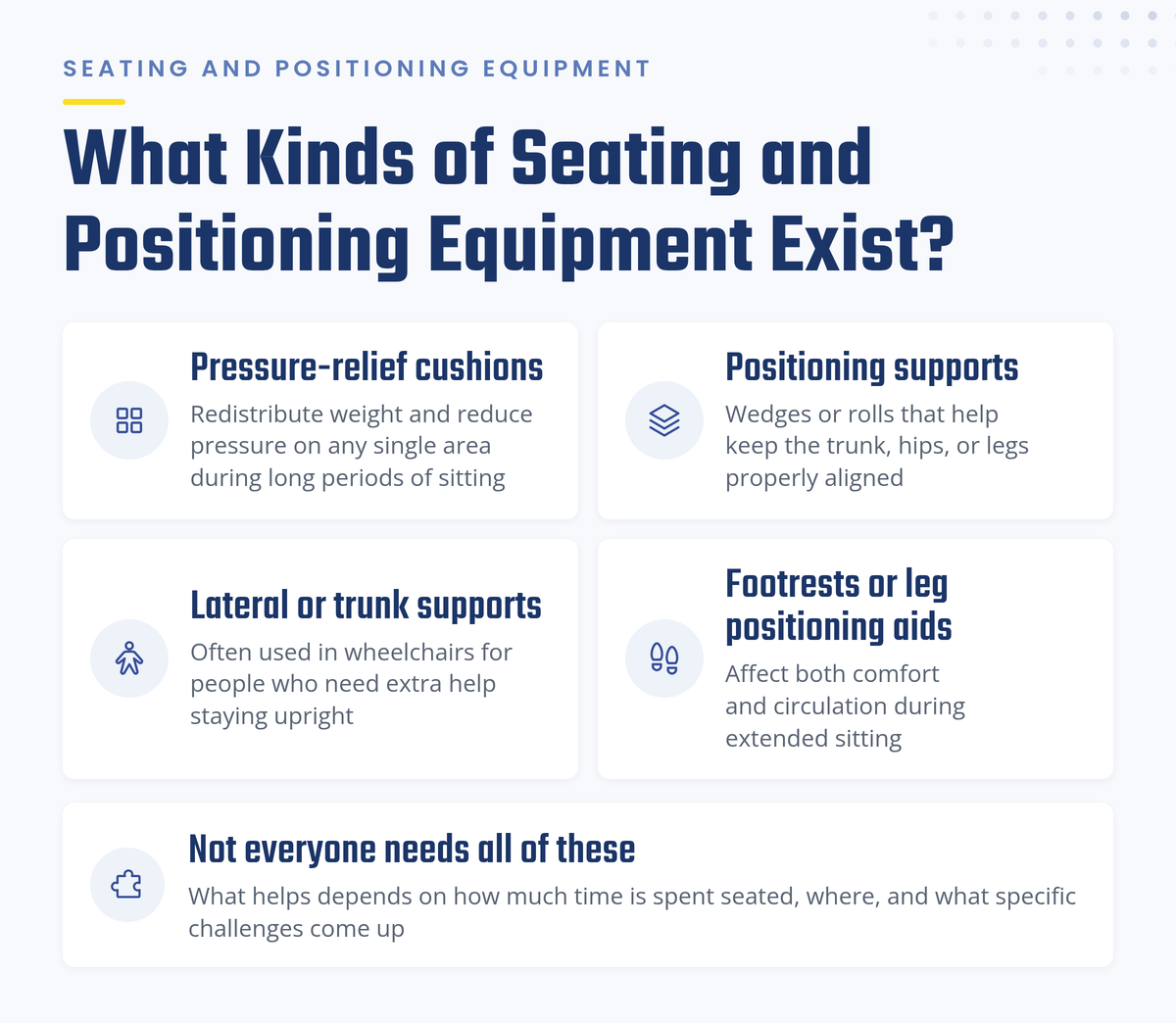
- Pressure-relief cushions, designed to redistribute weight and reduce pressure on any single area during long periods of sitting.
- Positioning supports, like wedges or rolls, that help keep the trunk, hips, or legs properly aligned.
- Lateral or trunk supports, often used in wheelchairs for people who need extra help staying upright.
- Footrests or leg positioning aids, which affect both comfort and circulation during extended sitting.
Not everyone needs all of these. What actually helps depends on how much time is spent seated, where, and what specific challenges come up.
How Often Should Position Be Changed During the Day?
Even the right equipment doesn’t replace regular repositioning. Many care teams recommend shifting weight or changing position at set intervals throughout the day, particularly for anyone at higher risk of skin breakdown. The right frequency depends on individual risk factors like mobility, sensation, and skin health, so it’s worth asking a provider or therapist for guidance specific to the situation rather than following a generic rule.
What Are Signs the Current Seating Setup Isn’t Working?
A few signals are worth paying attention to:
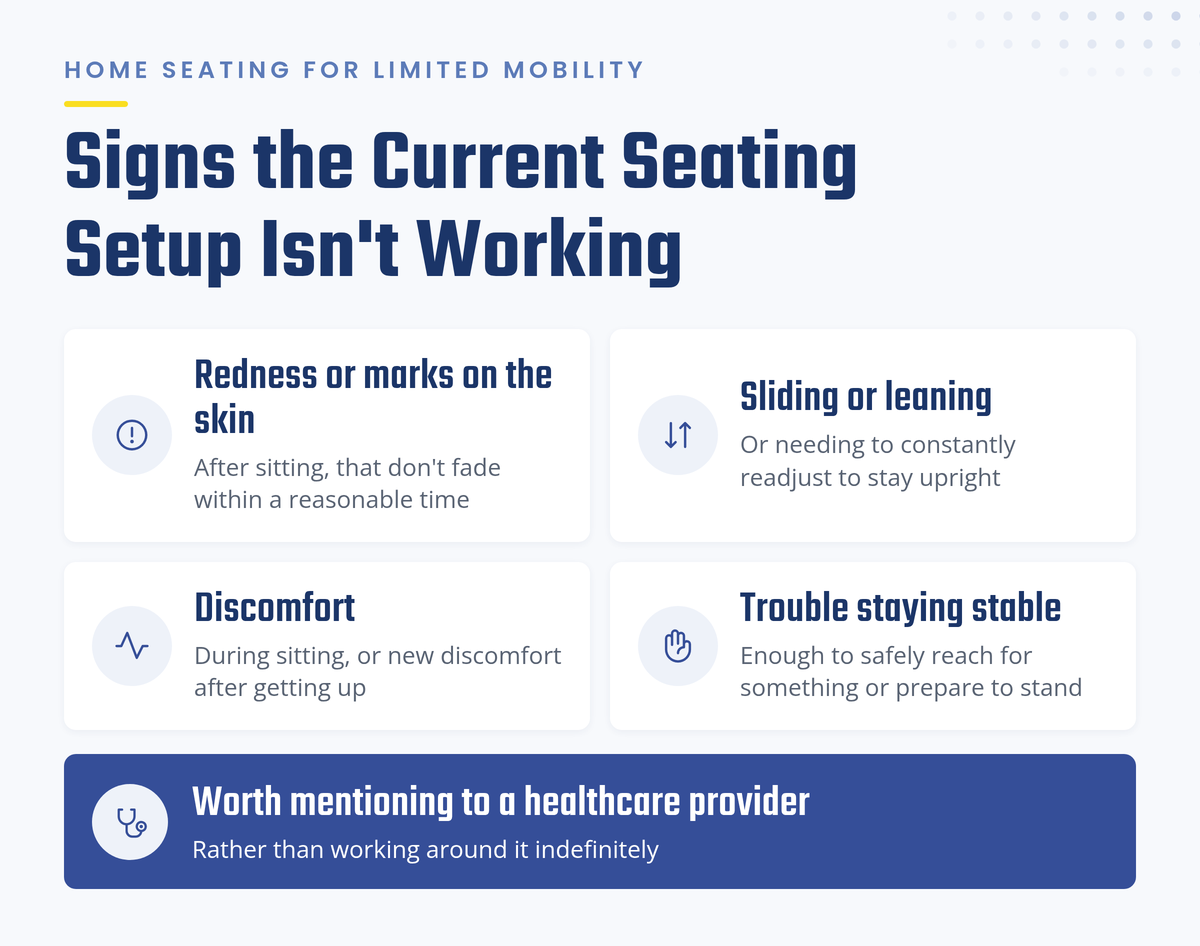
- Redness or marks on the skin after sitting that don’t fade within a reasonable time
- Sliding, leaning, or needing to constantly readjust to stay upright
- Discomfort during sitting, or new discomfort after getting up
- Difficulty staying stable enough to safely reach for something or prepare to stand
Any of these are worth mentioning to a healthcare provider rather than working around indefinitely.
How Does Seating Affect Fall Risk?
Positioning plays a bigger role in fall prevention than it might seem. Someone who’s sliding forward in a chair, leaning to one side, or straining against poor support is at higher risk when they attempt to stand or transfer. Stable, well-supported seating makes those moments safer. For a broader look at reducing fall risk throughout the home, our guide on room-by-room fall prevention is a useful next step.
What Should You Consider When Choosing Seating Equipment?
A few questions help narrow down what’s actually needed:
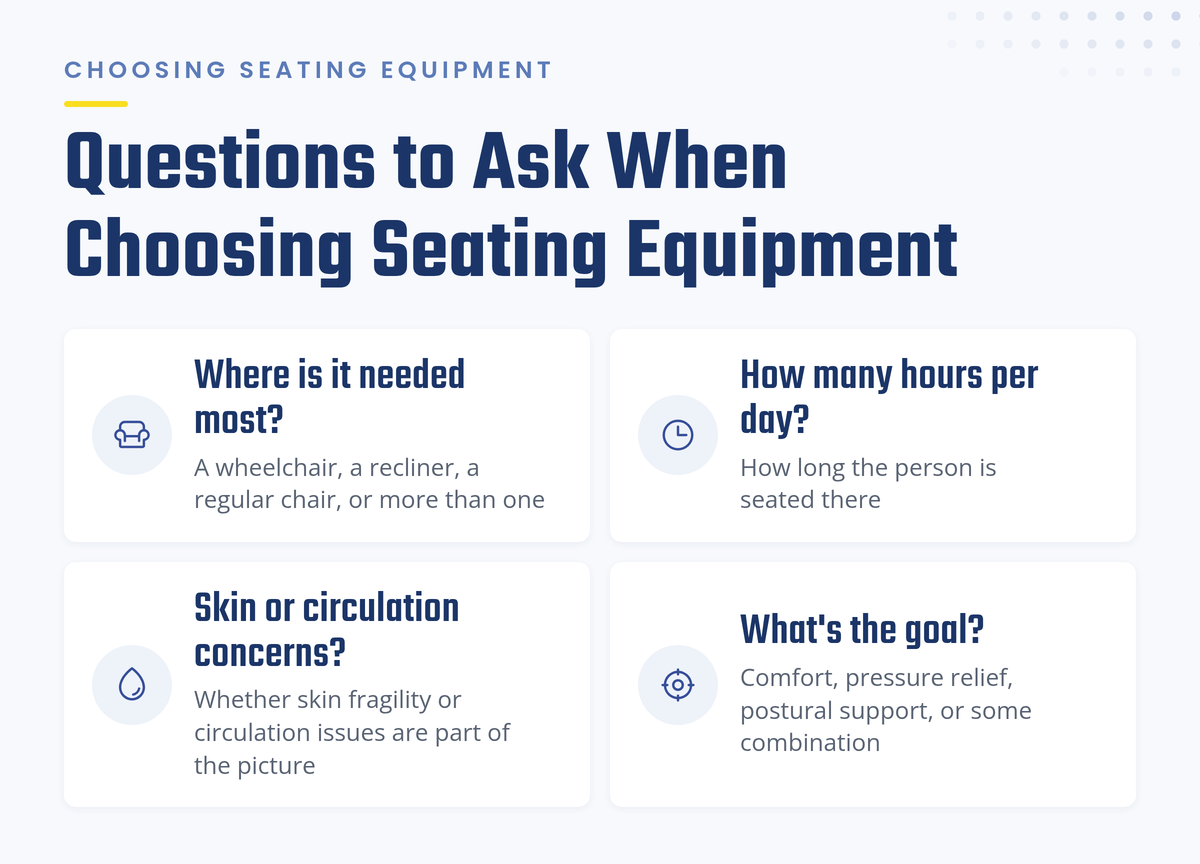
- Where is the equipment needed most: a wheelchair, a recliner, a regular chair, or more than one?
- How many hours per day is the person seated there?
- Are skin fragility or circulation issues part of the picture?
- Is the goal comfort, pressure relief, postural support, or some combination?
When Should You Talk to a Healthcare Provider?
A physical or occupational therapist can formally assess positioning needs, which is especially useful for wheelchair users or anyone with a complex seating situation. It’s also worth revisiting the setup if new pressure areas develop, comfort changes, or the amount of time spent seated increases.
Is Seating Equipment Covered by Insurance?
Coverage varies by plan and by item. Pressure-relief cushions and certain positioning supports may be covered as durable medical equipment when a physician documents medical necessity, similar to other DME categories. As with any equipment purchase, confirming coverage and documentation requirements with your insurance provider or equipment supplier before buying can help avoid an unexpected out-of-pocket cost.
Not every need is long-term, either. If the situation is a temporary one, recovering from surgery or a short-term mobility setback, our guide on renting versus buying durable medical equipment can help you decide whether renting makes more sense than buying outright.
How Ozark Medical Equipment Can Help
Ozark Medical Equipment offers seating and positioning equipment and can help figure out what actually fits your situation, rather than guessing at a cushion or support off a shelf. If getting around outside the home, not just seated comfort, is also part of what you’re weighing, our guide on mobility scooters covers that side of things.
Ready to Talk Through Your Seating Setup?
Call 573-686-5510 to talk with our team about pressure relief, positioning support, or general seating comfort.
Frequently Asked Questions
How do I know if I need a pressure-relief cushion versus a general comfort cushion?
This depends on how much time is spent seated and whether skin health or circulation is a concern. A healthcare provider or occupational therapist can help determine which type is appropriate for your situation.
Can positioning equipment help someone who isn’t a full-time wheelchair user?
Yes. Anyone spending significant time in a chair each day, including during recovery from surgery or illness, can benefit from proper positioning support.
How often should seating equipment be reassessed?
There’s no single timeline. It’s worth revisiting whenever comfort changes, new pressure areas appear, or the amount of time spent seated increases.