Introduction
The bathroom is the most common place in the home for a fall to happen. Wet, hard surfaces, tight spaces, and the need to sit down, stand up, and turn around in a small area all add up to more risk than most other rooms.
Three types of equipment address most of that risk: grab bars, shower chairs or benches, and raised toilet seats. Each solves a different part of the problem, and most people need more than one.
Why Is the Bathroom the Highest Fall-Risk Room?
A few factors combine here that do not exist in the same way anywhere else in the house. Floors get wet and stay slippery. Surfaces are hard, so a fall is more likely to cause an injury. Getting in and out of a tub or shower requires balance and a change in height. Sitting down and standing up from a toilet requires strength in the legs and hips that may have declined.
None of this means the bathroom needs to stay risky. Most of it can be addressed with a few pieces of equipment placed in the right spots.
Do Grab Bars Need to Be Installed, or Can I Use a Suction Cup Bar?
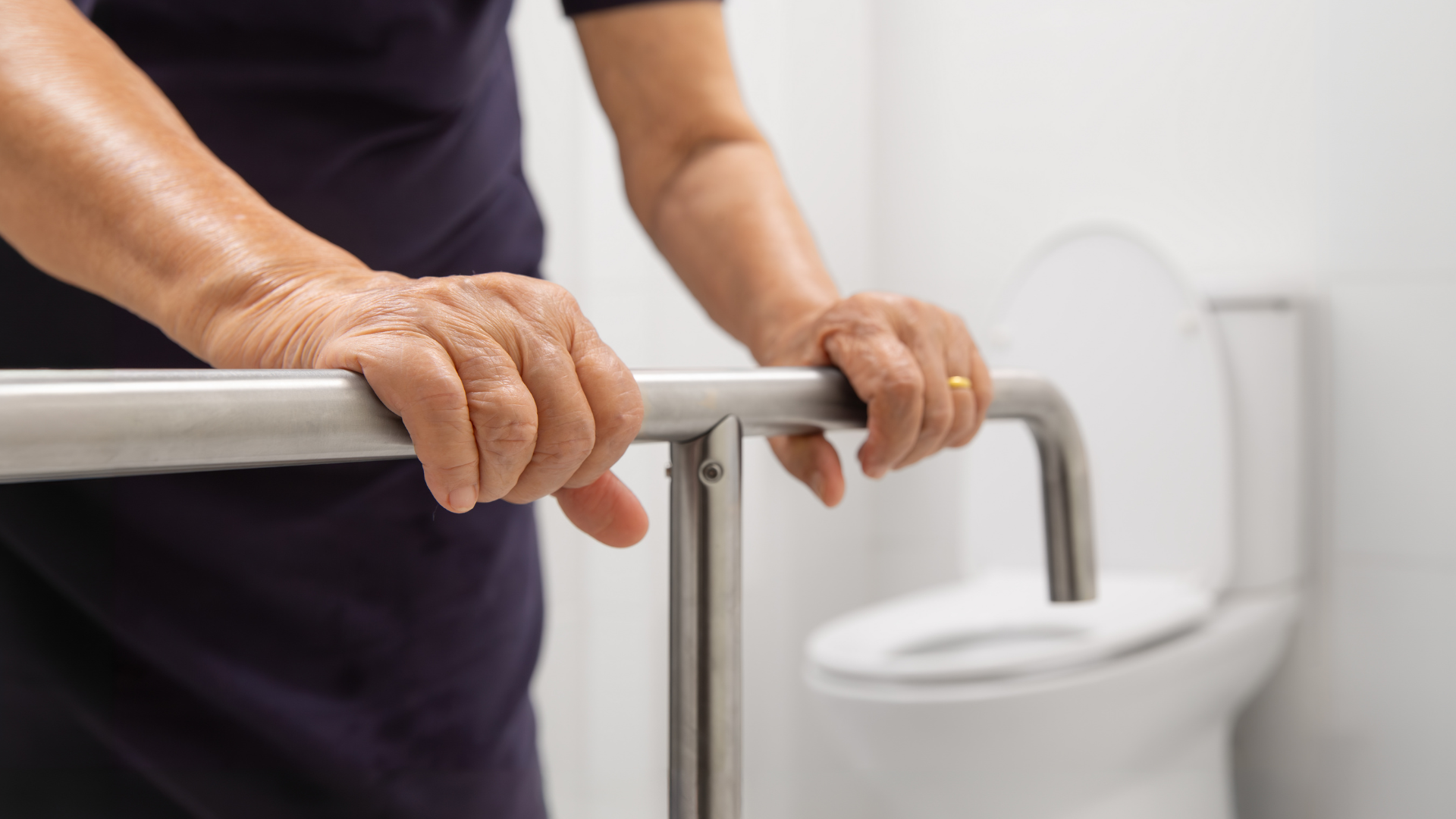
Grab bars need to be installed into a wall stud or with proper anchoring, not attached with suction cups.
Suction cup bars are marketed as a simple, no-tools option, but they are not rated to support a person’s full body weight in an emergency, which is exactly the moment a grab bar needs to work. A properly installed grab bar is rated to hold significantly more weight and will not fail under pressure.
The most useful locations for grab bars are:
- Next to the toilet, positioned to help with sitting down and standing up
- Inside the shower or tub, positioned for balance while stepping in, out, and while standing
- Outside the shower or tub, for balance while getting a towel or dressing
A professional installer can identify wall studs and install bars at the correct height and angle for the person using them, which matters more than most people expect.
Shower Chair or Transfer Bench: What Is the Difference?
A shower chair sits entirely inside the shower or tub. It works well for someone who can safely step into the shower but needs to sit while washing, either due to fatigue, balance concerns, or limited standing tolerance.
A transfer bench extends partly outside the tub, so a person can sit down outside the tub first, then slide across the bench into the shower without having to step over the tub wall while standing. This is usually the better option for someone with significant balance issues, a recent hip or knee surgery, or difficulty lifting a leg over a tub wall.
Choosing between the two usually comes down to how much difficulty someone has stepping over the edge of the tub, which is worth discussing with a physical therapist if you are recovering from surgery.
Who Actually Needs a Raised Toilet Seat?
A raised toilet seat adds height to a standard toilet, which reduces how far someone needs to bend their hips and knees to sit down or stand up.
This tends to help:
- People recovering from hip or knee replacement surgery, where bending past a certain angle is restricted
- People with arthritis or joint pain in the hips or knees
- People with general muscle weakness in the legs that makes standing from a low seat difficult
Raised toilet seats come in versions with and without armrests. Armrests provide more support for standing but take up more space, which matters in a smaller bathroom.
Does Insurance Cover Bathroom Safety Equipment?
Coverage varies by item and by plan. Grab bars and other equipment considered home modifications are often not covered the same way as equipment classified as durable medical equipment, even when they serve a similar safety purpose. Some raised toilet seats and shower chairs may be covered under certain plans when documented as medically necessary, but this is not guaranteed.
Because coverage rules vary so much by item, it is worth asking your insurance provider or equipment supplier directly which specific products, if any, your plan covers before purchasing.
What Should You Consider Before Buying Bathroom Safety Equipment?
- Who is using it, and what is their specific limitation? Balance, strength, and range of motion each point toward different equipment.
- Bathroom layout and space. A transfer bench needs more clearance than a shower chair. A raised toilet seat with armrests needs more width than one without.
- Installation. Grab bars should be professionally installed. Shower chairs and raised toilet seats are typically simple to set up without installation.
- Whether this is a temporary or long-term need. Recovering from surgery may only require equipment for a few weeks or months, which can affect whether renting or buying makes more sense.
When Should You Talk to a Healthcare Provider?
If a fall has already happened in the bathroom, or if getting in and out of the shower or up from the toilet has become noticeably harder, it is worth mentioning to a healthcare provider. They can recommend a home safety evaluation or physical therapy assessment to identify exactly what equipment and modifications would help most.
How Can Ozark Medical Equipment Help?
Ozark Medical Equipment carries grab bars, shower chairs, transfer benches, and raised toilet seats, and our team can help you figure out which combination fits your bathroom and your specific needs.
For a broader look at fall risks throughout the rest of the home, our guide on room-by-room fall prevention covers other areas worth checking. If ramps or entryway access are also a concern, our guide to choosing the right wheelchair ramp walks through that decision as well.
Ready to Bathroom-Proof Your Home?
Call 573-686-5510 to talk with our team about grab bars, shower seating, and toilet safety equipment for your home.
Frequently Asked Questions
It depends on your comfort with home improvement work, but grab bars need to be anchored into a wall stud or with hardware rated for full body weight, not just any screw into drywall. A professional installer can make sure the bar is placed at the right height and will hold under real pressure.
A shower chair sits entirely inside the shower or tub and works for someone who can step in safely but needs to sit while washing. A transfer bench extends outside the tub so a person can sit down before sliding in, which helps if stepping over the tub wall is difficult.
Coverage varies. Grab bars are often classified as home modifications rather than durable medical equipment, which can affect whether a specific plan covers them. Check with your insurance provider about your specific plan and situation.