
Somewhere between walking independently and needing a wheelchair full time, there’s a stretch many people navigate: still able to stand, transfer, and get around a room, but tired, unsteady, or in pain after even a short distance. A mobility scooter is often built for exactly that stretch.
It’s not the right fit for everyone in that situation, though, and it’s not a decision to make based on a single product listing. Here’s how to think through whether one makes sense, and what to consider before renting or buying. If you’re not yet sure any equipment is needed at all, our guide on signs you may need home medical equipment is a good place to start.
What Is a Mobility Scooter, and Who Is It For?
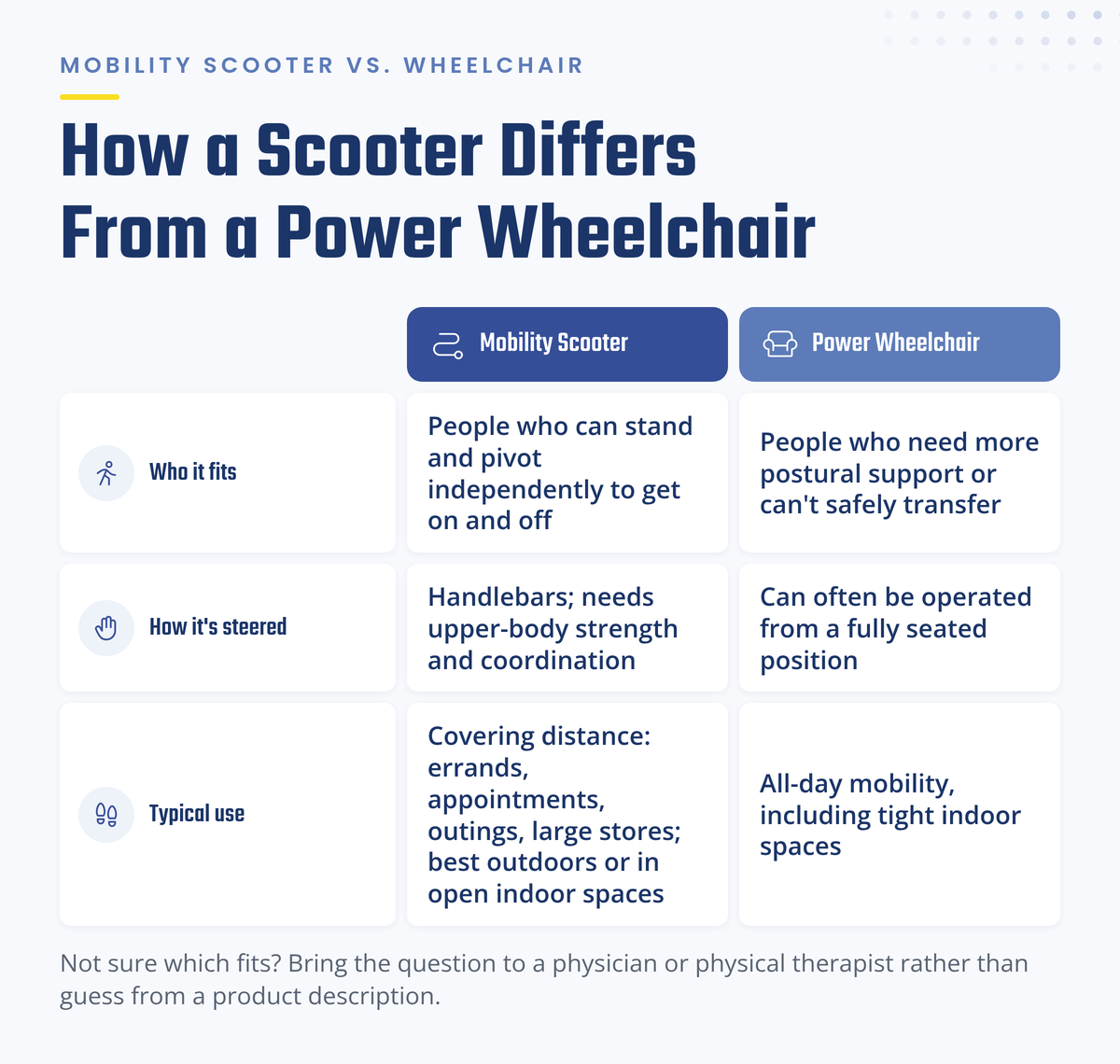
A mobility scooter is a seated, battery-powered device steered with handlebars, typically used for longer distances than someone can comfortably or safely walk. It generally works best for people who can stand and pivot independently to get on and off, and who have enough upper-body strength and coordination to steer.
That makes scooters a common fit for people managing arthritis, COPD, heart conditions, or general fatigue that limits walking distance, rather than for people who need support to sit upright or transfer safely. If standing and transferring independently isn’t realistic, a power wheelchair is usually the more appropriate equipment, since it’s typically designed with additional seating support and can often be operated from a fully seated position.
How Is a Scooter Different From a Power Wheelchair?
The two get confused often, but they’re built for different situations.
Scooters are generally used for covering distance: errands, appointments, family outings, moving through a large store, and tend to work best outdoors or in open indoor spaces. Power wheelchairs are more often used for all-day mobility, including tight indoor spaces, and are built for people who need more postural support or can’t safely operate handlebar-style steering.
If you’re not sure which category fits, that’s a reasonable question to bring to a physician or physical therapist rather than guess from a product description.
What Should You Consider Before Choosing One?
A few practical questions matter as much as the equipment itself:
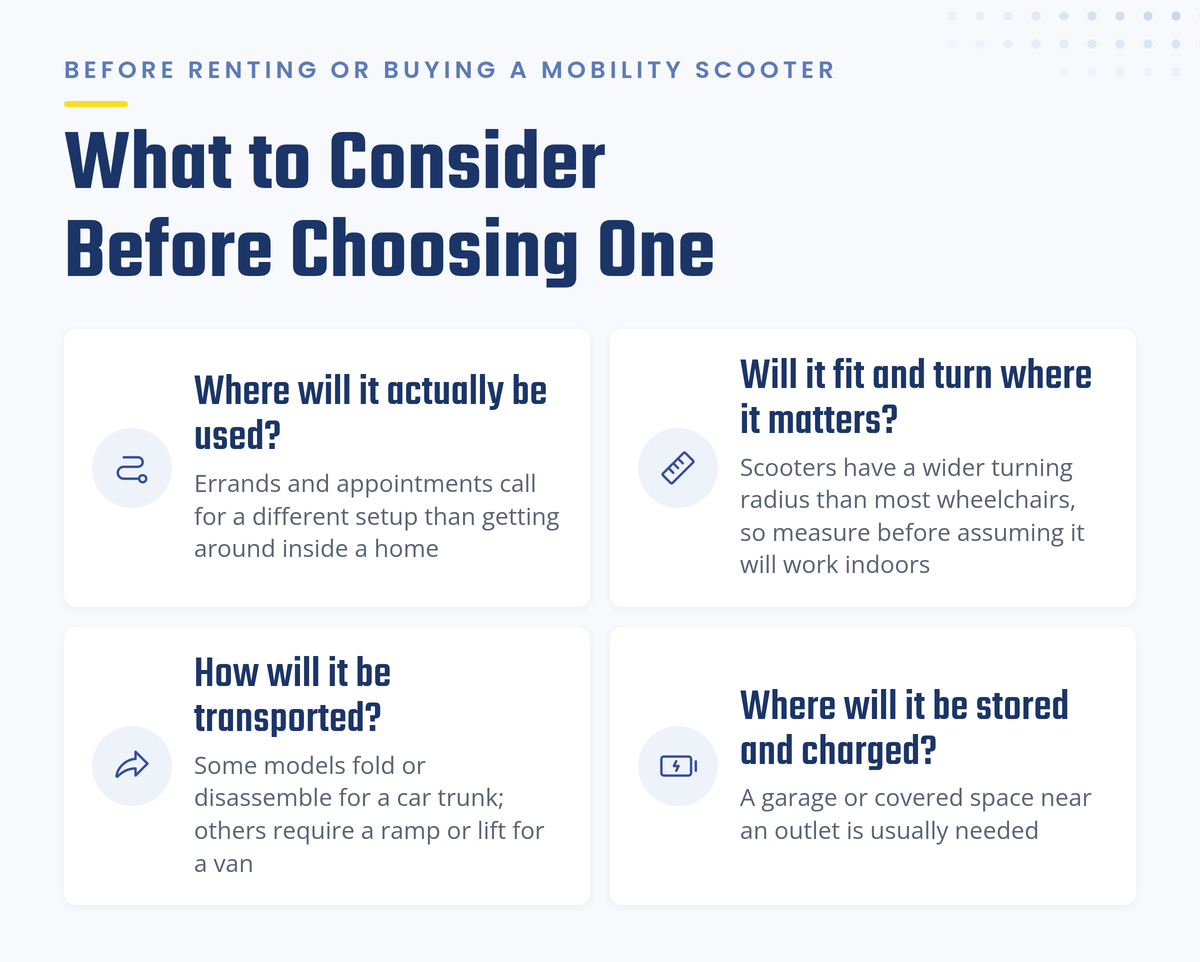
- Where will it actually be used? Errands and appointments call for a different setup than getting around inside a home.
- Will it fit through doorways and turn in the spaces that matter? Scooters have a wider turning radius than most wheelchairs, so measure before assuming it will work indoors.
- How will it be transported? Some models fold or disassemble for a car trunk. Others require a ramp or lift for a van. This affects both the model and the vehicle setup.
- Where will it be stored and charged? A garage or covered space near an outlet is usually needed.
Should You Rent or Buy?
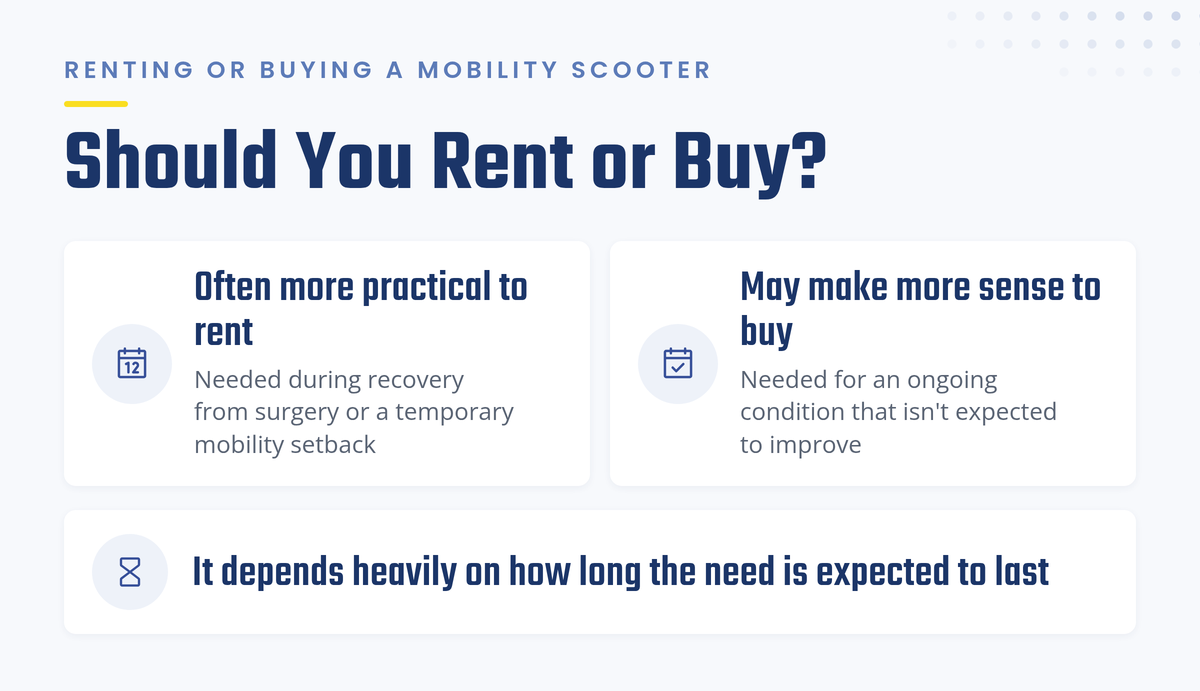
This depends heavily on how long the need is expected to last. A scooter needed during recovery from surgery or a temporary mobility setback is often more practical to rent. A scooter needed for an ongoing condition that isn’t expected to improve may make more sense to buy outright. Our guide on renting versus buying durable medical equipment walks through the full decision.
Does Insurance Cover a Mobility Scooter?
Coverage depends on your specific plan. Many plans, including Original Medicare, can cover a portion of the cost as durable medical equipment when a physician documents that it’s medically necessary, typically meaning walking is significantly limited even with a cane, walker, or rollator. Because documentation requirements vary, it’s worth confirming what’s needed with your insurance provider or equipment supplier before purchasing.
What Should You Ask Before Getting One?
Beyond insurance, a few practical questions are worth asking before choosing a specific model:
- What’s the weight capacity, and does it match the user’s needs?
- How far can it travel on a full charge, and how long does charging take?
- Is it rated for outdoor use, indoor use, or both?
- How easily does it break down or fold for travel, if that matters?
When Should You Talk to a Healthcare Provider?
If walking distance has been declining, or falls or near-falls have become a concern, that’s worth raising with a physician or physical therapist before choosing equipment on your own. They can help confirm whether a scooter, a wheelchair, or a different mobility aid altogether is the safer fit for your specific situation.
How Ozark Medical Equipment Can Help
Ozark Medical Equipment offers mobility scooters and can help match the right model to your lifestyle, home layout, and transportation needs, rather than defaulting to whatever’s in stock. If a scooter turns out not to be the right fit, our team can also talk through other mobility options, including the walkers, rollators, and canes covered in our guide on choosing the right mobility aid. And if long stretches of sitting, rather than getting around, is more of the daily challenge, our guide on seating and positioning equipment covers that side of comfort and safety.
Thinking About a Scooter?
Call 573-686-5510 to talk through whether a mobility scooter fits your situation, and what renting or buying would look like.
Frequently Asked Questions
Can I use a mobility scooter indoors?
Some models are compact enough for indoor use, but scooters generally have a wider turning radius than wheelchairs, so measuring doorways and hallways before choosing a model matters. If most of the need is indoors, a different mobility aid may be a better fit.
Do I need a prescription for a mobility scooter?
Not necessarily to purchase one, but a prescription or documentation of medical necessity is typically required for insurance to help cover the cost.
What if I’m not sure whether I need a scooter or a wheelchair?
That’s a good question for a physician or physical therapist rather than a guess. The right choice usually comes down to whether you can safely stand, transfer, and steer independently.
Can I bring a mobility scooter when I fly or travel?
Most airlines accommodate mobility scooters as checked or gate-checked equipment, but policies vary, and scooters with lithium batteries often require advance notice or specific documentation. Confirm the airline’s specific policy before the trip rather than assuming standard baggage rules apply, and consider whether a foldable or disassembling model makes travel easier.