
Quick answer: Studies of shockwave therapy, the broader category StemWave belongs to, suggest it may ease knee arthritis pain and improve function for some people, mostly in the short term and mostly in mild to moderate arthritis. The quality of that research is generally low, and none of it shows shockwave rebuilds cartilage or reverses arthritis. Most studies used other shockwave devices, not StemWave. It tends to work best alongside the basics arthritis experts recommend most: exercise, weight management, and the right support.
Knees that feel stiff when you stand up and ache on the stairs are one of the most common reasons people ask us about StemWave at Ozark Total Healthcare. Many have already tried pain relievers or an injection and want another option. If that sounds familiar, you may be dealing with knee osteoarthritis, and it helps to know what StemWave can and can't do for it.
What Is Actually Happening in an Arthritic Knee?
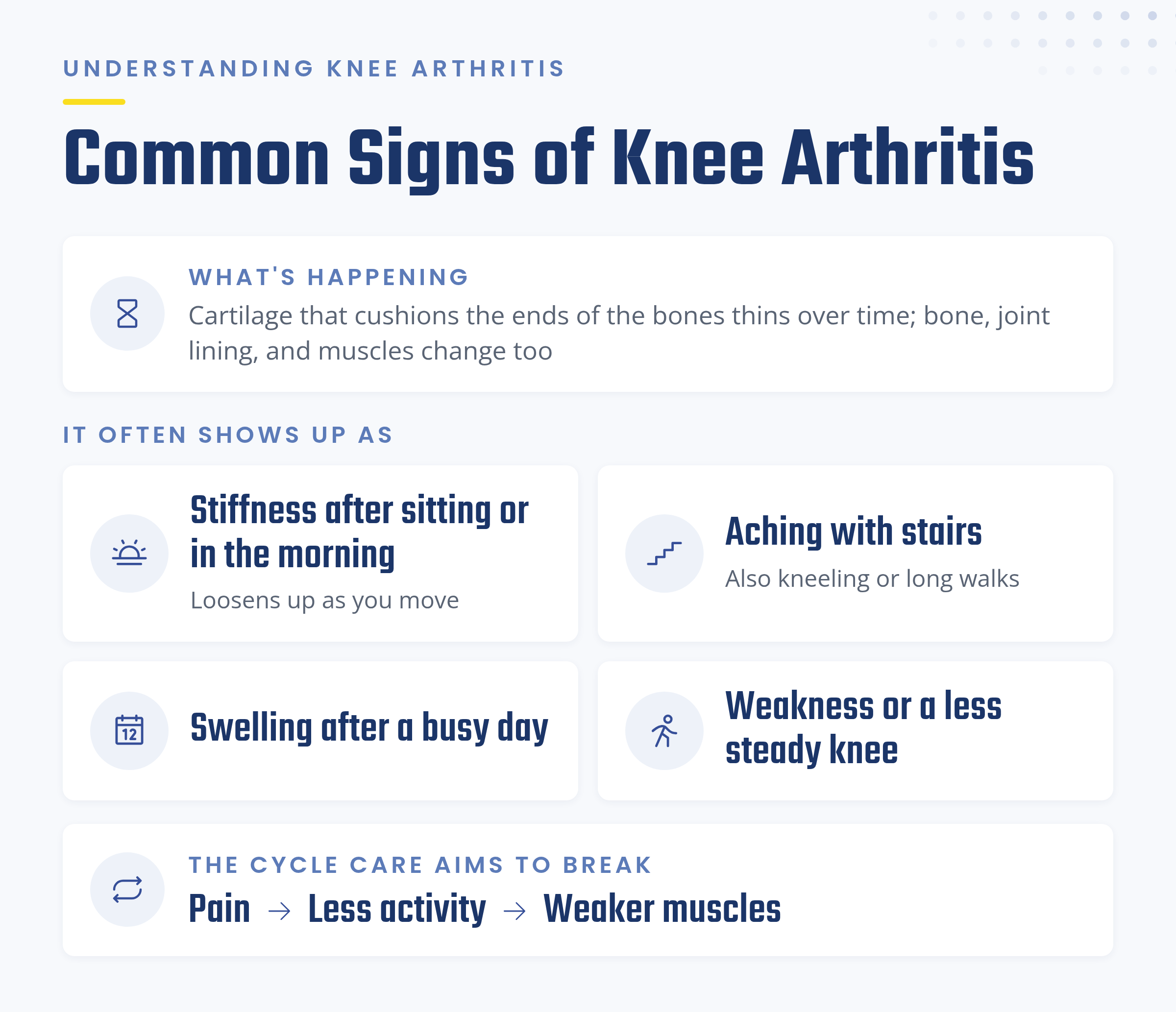
Knee osteoarthritis is the "wear and tear" type of arthritis. The smooth cartilage that cushions the ends of the bones thins over time, and the bone, joint lining, and surrounding muscles change too. It often shows up as:
- Stiffness after sitting or first thing in the morning that loosens up as you move
- Aching with stairs, kneeling, or long walks
- Swelling after a busy day
- A sense of weakness or the knee feeling less steady
Treatment aims to ease pain, keep you moving, and break the cycle where pain leads to less activity and weaker muscles. It is not a quick fix.
What Does the Research Say About Shockwave for Knee Arthritis?
Shockwave therapy, also called extracorporeal shockwave therapy or ESWT, sends pulses of acoustic energy into tissue from outside the body. Here's what knee arthritis studies show:
- Pain and function often improved. A 2020 review of 14 randomized trials found shockwave lowered knee pain by about 1.7 points on a 10-point scale and improved daily function in the short term, with few minor side effects.
- Benefits were strongest in the short term. Some reviews found effects lasting months, but at least one found the benefit faded over time.
- The research quality is a real concern. A 2024 overview of the reviews rated almost all of the evidence as low or very low quality.
- Added to exercise, the extra benefit may be small. One review found that when shockwave was added to an exercise program, the added pain relief may not be large enough to notice.
- Most patients studied had mild to moderate arthritis, not severe "bone on bone" knees.
Researchers think shockwave may increase local blood flow and calm pain signaling around the joint. There is no good evidence that it regrows cartilage in people. The major U.S. arthritis guideline from the American College of Rheumatology doesn't address shockwave at all.
Where StemWave Fits, and What We Can't Promise
StemWave is a focused acoustic wave device. It is FDA-listed as a Class I device intended for the temporary relief of minor muscle aches and pains and a temporary increase in local blood circulation. That listing is not FDA approval to treat arthritis, and we are not aware of published studies on the StemWave device itself.
So the research above is about shockwave therapy in general. StemWave treatment won't cure arthritis or rebuild your knee. What it may do is take the edge off pain so moving and strengthening feel more doable. If you're new to it, start with what StemWave therapy is and how it works.
Who Is a Good Candidate for StemWave Therapy?
It may be worth a conversation if:
- You have been diagnosed with knee osteoarthritis, ideally mild to moderate
- Pain or stiffness limits walking, stairs, or daily activities
- You are working on exercise or physical therapy and want help with pain along the way
- You want a drug-free option, or you can't take certain pain medications
Talk with us before starting if you take blood thinners, have a bleeding disorder, have an infection or skin wound near the knee, or have cancer in or near the area. Shockwave device labels list these as warnings or reasons to avoid treatment. If you've had a knee replacement, check with your surgeon first, since at least one shockwave device label lists an implant in the treatment area as a reason not to treat.
If your arthritis is severe, it's natural to hope StemWave might help you avoid a knee replacement. The research hasn't shown that. For advanced arthritis, a talk with your doctor or an orthopedic specialist is a better first step.
How Does StemWave Work With Exercise, Bracing, and Weight?
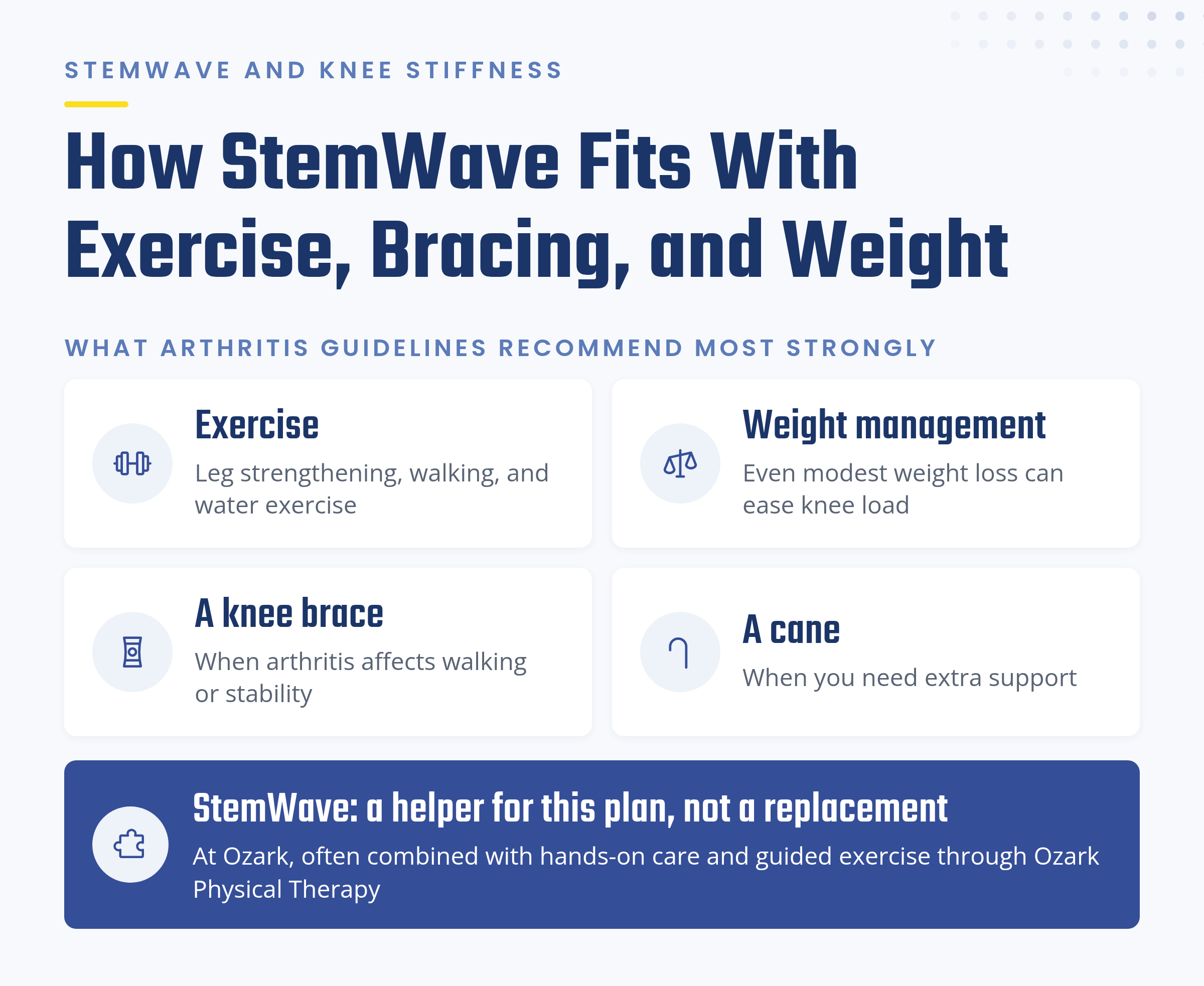
The treatments arthritis guidelines recommend most strongly aren't high-tech:
- Exercise, especially leg strengthening, walking, and water exercise
- Weight management, since even modest weight loss can ease knee load
- A knee brace when arthritis affects walking or stability
- A cane when you need extra support
A StemWave session fits best as a helper for this plan, not a replacement. At Ozark, it is often combined with hands-on care and guided exercise through Ozark Physical Therapy.
A knee brace may help when arthritis makes walking painful or your knee feels unsteady. Our bracing program fits osteoarthritis knee braces, including unloader braces, at our Poplar Bluff showroom or at home. Not sure you need one? Read how to know if you need a brace. If you're comparing options, our guide to custom vs. off-the-shelf braces explains the difference. For walking support, see choosing between a cane, walker, and rollator.
To compare StemWave with pain medication, injections, and surgery, see StemWave vs. traditional pain treatments.
When Should You See a Doctor First?
Get checked by a doctor before trying StemWave if you have:
- A hot, red, swollen knee, or a fever
- Sudden swelling after a twist or injury
- A knee that locks, catches, or gives way
- Calf pain or swelling, especially in one leg
- New pain around a knee replacement
These can point to infection, gout, a tear, a blood clot, or another problem that needs different care.
What Does a StemWave Plan for Knee Pain Look Like at Ozark?
Each treatment area typically takes about 5 to 8 minutes. Gel goes on the skin, and most people describe the waves as tapping or pulsing. Follow-up visits are often 10 to 20 minutes total, with no downtime, though mild soreness afterward is possible.
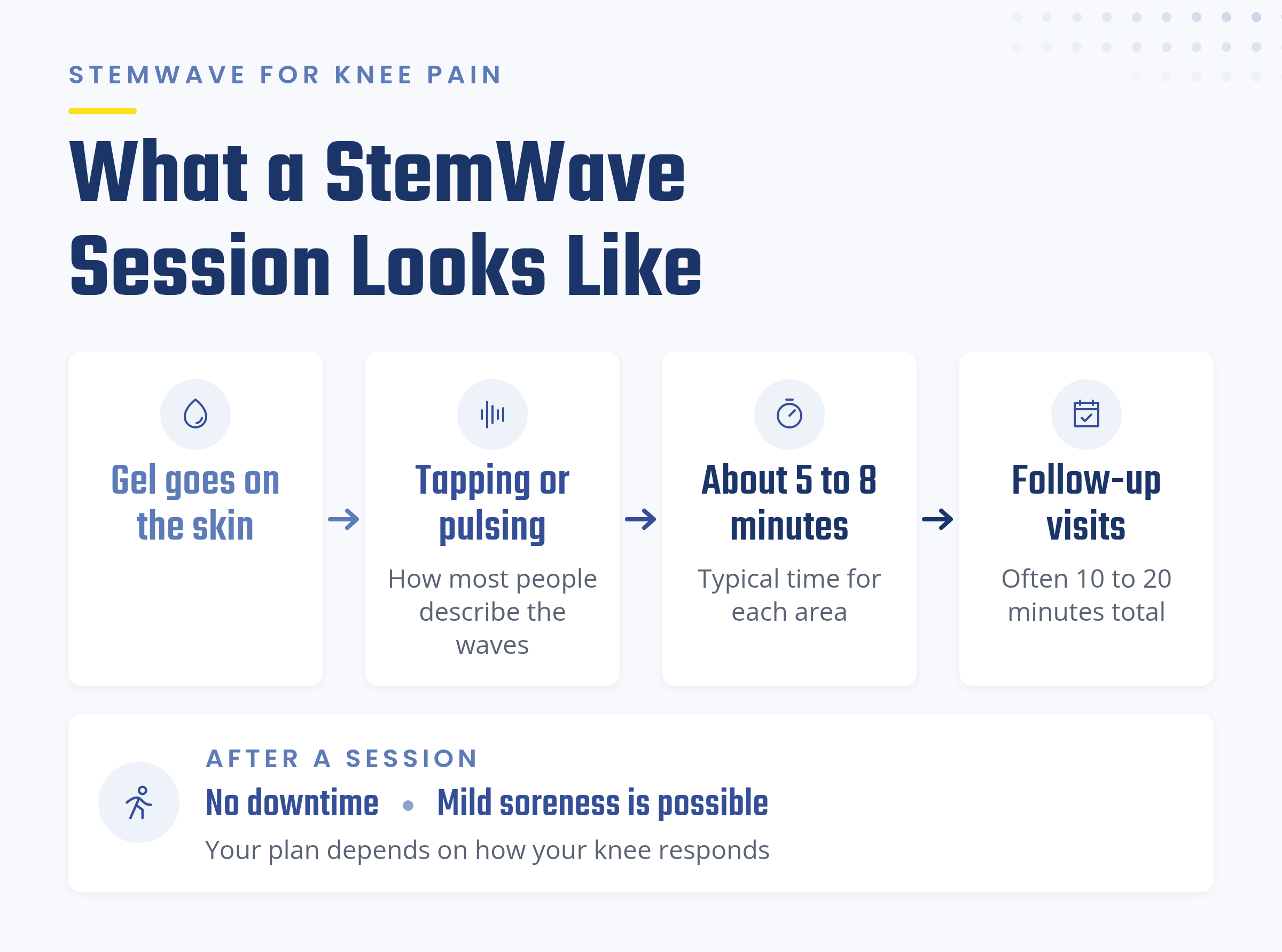
Your provider will recommend a number of sessions based on how you respond. Research studies used different devices and schedules, so your plan depends on how your knee responds and what else you are doing for it. See what to expect during a StemWave session and why StemWave care plans have a clear finish line.
Knee arthritis is one of several conditions we cover in our guide to the conditions StemWave can help treat. For more on lingering pain, read about focused wave therapy for chronic and acute pain.
Ready to Talk About Your Knees?
Stiff, achy knees can shrink your world a little at a time, from skipping walks to dreading the stairs. Our team at Ozark Physical Therapy will look at your knee, your history, and your goals, and we'll be honest about whether StemWave, bracing, exercise, or a doctor's visit makes the most sense.
Our StemWave page lists current session options and pricing, including lower rates when it's part of a physical therapy plan or for Wellness and EBO MD members.
Call 573-686-5510 to talk with our team about StemWave treatment in Poplar Bluff.
Frequently Asked Questions
Can StemWave rebuild cartilage in my knee?
No. There is no good evidence that shockwave therapy regrows cartilage or reverses arthritis in people. The goal is less pain and better movement.
Is StemWave FDA approved for arthritis?
No. It is FDA-listed as a Class I device for temporary relief of minor muscle aches and pains, not as a treatment for arthritis.
Can StemWave help me avoid a knee replacement?
That hasn't been shown. Most research involved mild to moderate arthritis and looked at pain and function over weeks to months.
Is StemWave therapy safe for older adults?
It is generally well tolerated. Temporary soreness or tenderness is the most common side effect, and we screen for blood thinners, infections, and implants first.
How many StemWave sessions do I need for knee arthritis?
It depends on how your knee responds and what else you're doing for it. Your provider will suggest a plan at your first visit and adjust it as you go. Some patients notice changes within the first few sessions, while others improve gradually.
Does insurance cover StemWave?
Coverage varies. Our service page lists self-pay session options, and our team can walk through costs with you.