
Quick answer: StemWave therapy uses focused acoustic waves. Research on shockwave therapy, the broader category StemWave belongs to, suggests it can reduce plantar fasciitis heel pain for many people whose pain has lasted months despite stretching and supportive shoes. Results aren't guaranteed, studies vary, and most used other shockwave devices, not StemWave. It works best as one part of a plan that includes stretching, good footwear, and a clear diagnosis. If you have diabetes or numbness in your feet, talk with your doctor first.
Sharp heel pain with your first steps in the morning is one of the most common complaints we hear at Ozark Total Healthcare. Often patients have already tried new shoes, stretches, and rest, and the pain keeps coming back. That pattern usually points to plantar fasciitis, and it is worth understanding before you choose a treatment.
Why Does Plantar Fasciitis Hang On So Long?
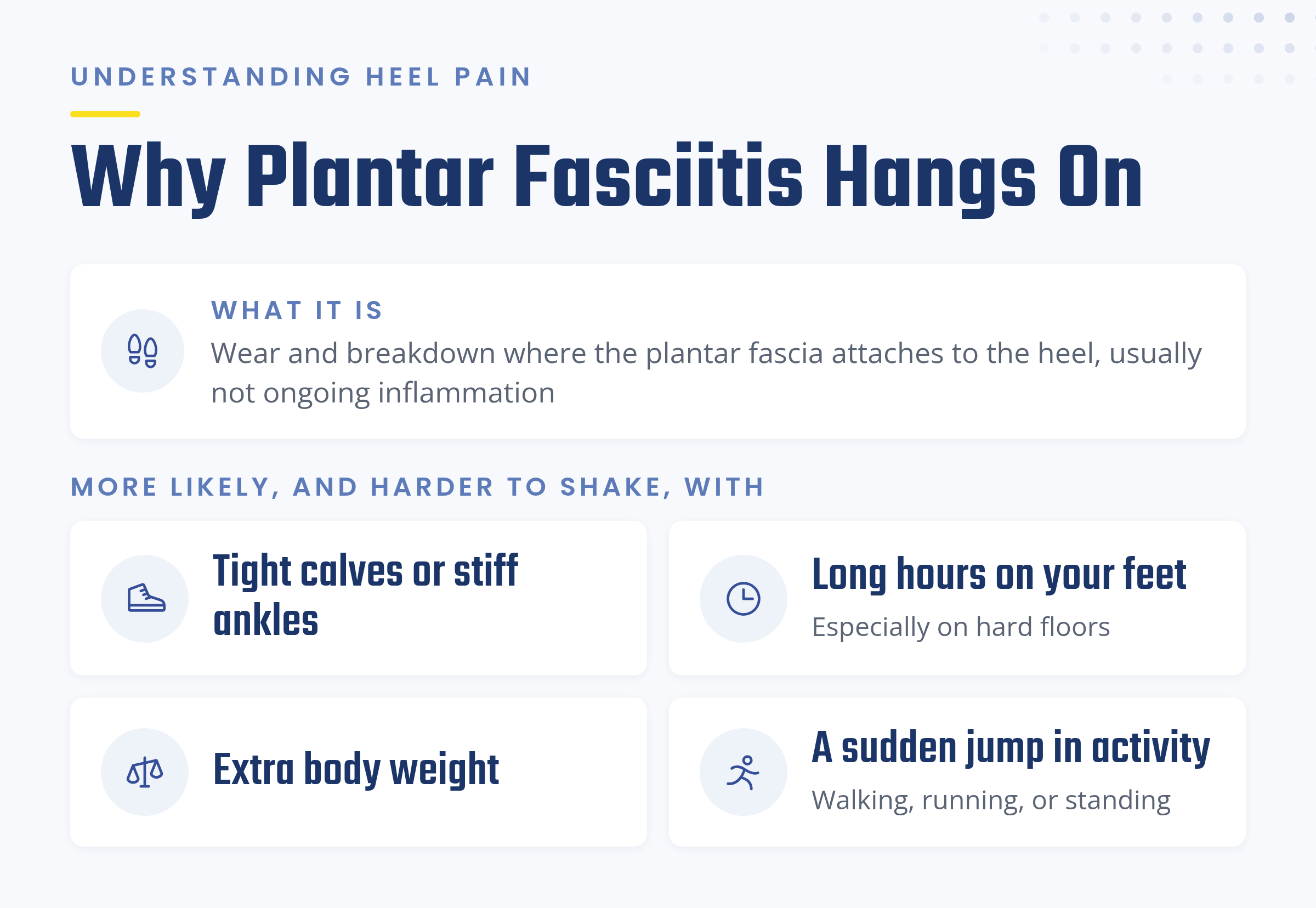
The plantar fascia is a thick band of tissue along the bottom of your foot that supports your arch. Despite the name, plantar fasciitis usually isn't ongoing inflammation. Doctors now describe it as wear and breakdown where the fascia attaches to the heel, which is why anti-inflammatory approaches alone often don't settle it.
It is more likely, and harder to shake, with:
- Tight calves or stiff ankles
- Long hours on your feet, especially on hard floors
- Extra body weight
- A sudden jump in walking, running, or standing
The good news is that roughly 80% of people improve within a year with simple care. The hard part is that many people live with it for over a year before getting help. Two patterns we commonly see: pain that eases during the day but returns by evening, and pain that flares after sitting.
What Does the Research Say About Shockwave for Heel Pain?
Shockwave therapy, also called extracorporeal shockwave therapy or ESWT, sends pulses of acoustic energy into tissue from outside the body. Heel pain is one of its most studied uses.
- Several reviews found real pain reduction. A 2024 review of 11 randomized trials found shockwave lowered heel pain by roughly 3 points on a 10-point scale, and most people tolerated it well.
- Results aren't consistent. Some well-designed trials found little benefit over placebo. Energy level and device type seem to matter, and there is no agreed-upon best protocol.
- It's usually for stubborn cases. Family medicine guidance says shockwave may help when heel pain hasn't improved with standard care. The shockwave devices the FDA approved for heel pain were approved for pain lasting 6 months or more after other treatments failed.
- It works better with stretching. One review found stretching plus shockwave reduced pain more than shockwave alone in the short term.
Researchers think shockwaves may increase local blood flow and change how pain signals behave, though the exact mechanism is still unclear. That makes shockwave a reasonable option for persistent heel pain, not a sure thing.
Where StemWave Fits, and What We Can't Promise
StemWave is a focused acoustic wave device. It is FDA-listed as a Class I device intended for temporary relief of minor muscle aches and pains and a temporary increase in local blood circulation. That listing is not FDA approval to treat plantar fasciitis, and we aren't aware of published studies on the StemWave device itself.
So the research above is about shockwave therapy in general. We track how each patient responds, and we won't promise StemWave treatment will fix your heel. For the basics, start with what StemWave therapy is and how it works.
Who Is a Good Candidate for StemWave Therapy?
It may be worth a conversation if:
- Your heel pain has lasted 3 months or more
- You've already tried stretching, supportive shoes, and activity changes
- The pain is at the bottom of the heel and worst with first steps or after rest
- You want a non-surgical, drug-free option before injections or surgery
Talk with us first if you take blood thinners, have a bleeding disorder, an infection or open wound on your foot, poor circulation in your legs, or cancer in or near the area. Shockwave device labels list these as reasons to avoid or delay treatment.
How Does StemWave Work With Stretching, Shoes, and Insoles?
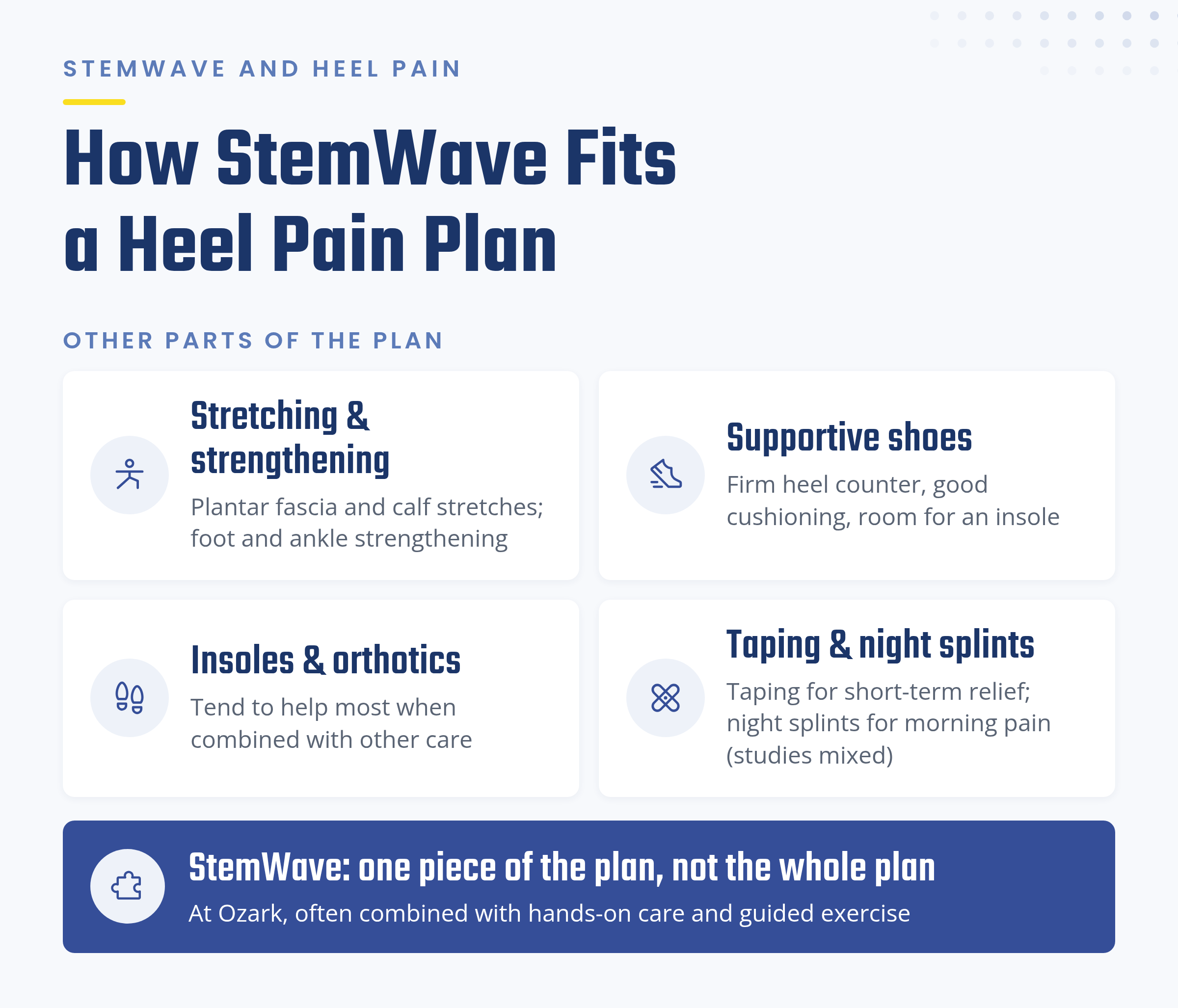
Think of StemWave treatment as one piece of the plan, not the whole plan. The physical therapy guideline for heel pain supports plantar fascia and calf stretching, foot and ankle strengthening, taping for short-term relief, and night splints for morning pain, though night splint studies are mixed. Custom insoles and orthotics tend to help most when combined with other treatment rather than used alone.
Supportive footwear matters too. Shoes with a firm heel counter, good cushioning, and room for a supportive insole can make standing and walking easier on a sore heel. Our post on how diabetic shoes differ from regular shoes explains features that matter for anyone choosing supportive shoes. If you have diabetes and qualify, our team fits diabetic shoes and custom insoles, and ankle braces and foot supports are available through our bracing program.
At Ozark, StemWave is often combined with hands-on care and guided exercise, which fits the research. To compare options, see StemWave vs. traditional pain treatments.
A Special Caution for Diabetic Feet
If you have diabetes, heel pain needs a closer look first. Diabetic neuropathy can dull feeling in your feet, and a red, warm, swollen foot can signal a serious problem called Charcot foot, even when it doesn't hurt much.
There is also an evidence gap. Some of the major trials behind FDA-approved heel shockwave devices excluded people with diabetes or peripheral neuropathy. And during a StemWave session, your provider relies on your feedback about tenderness, which is harder to give with reduced feeling. That doesn't automatically rule you out, but we'd want your doctor involved first.
Protective footwear matters here too. Learn how diabetic shoes help prevent foot problems, and see who qualifies for diabetic shoes and whether insurance covers them.
When Should You See a Doctor First?
Get checked by a doctor before trying StemWave if you have:
- A pop, a fall, or trouble putting weight on the foot
- Numbness, tingling, or burning in the heel or sole
- Deep bone pain, or pain that wakes you at night
- Redness, warmth, swelling, fever, or an open sore
- Heel pain in a child or teenager
These can point to a stress fracture, nerve problem, infection, or another condition that needs different care.
What Does a StemWave Plan for Heel Pain Look Like at Ozark?
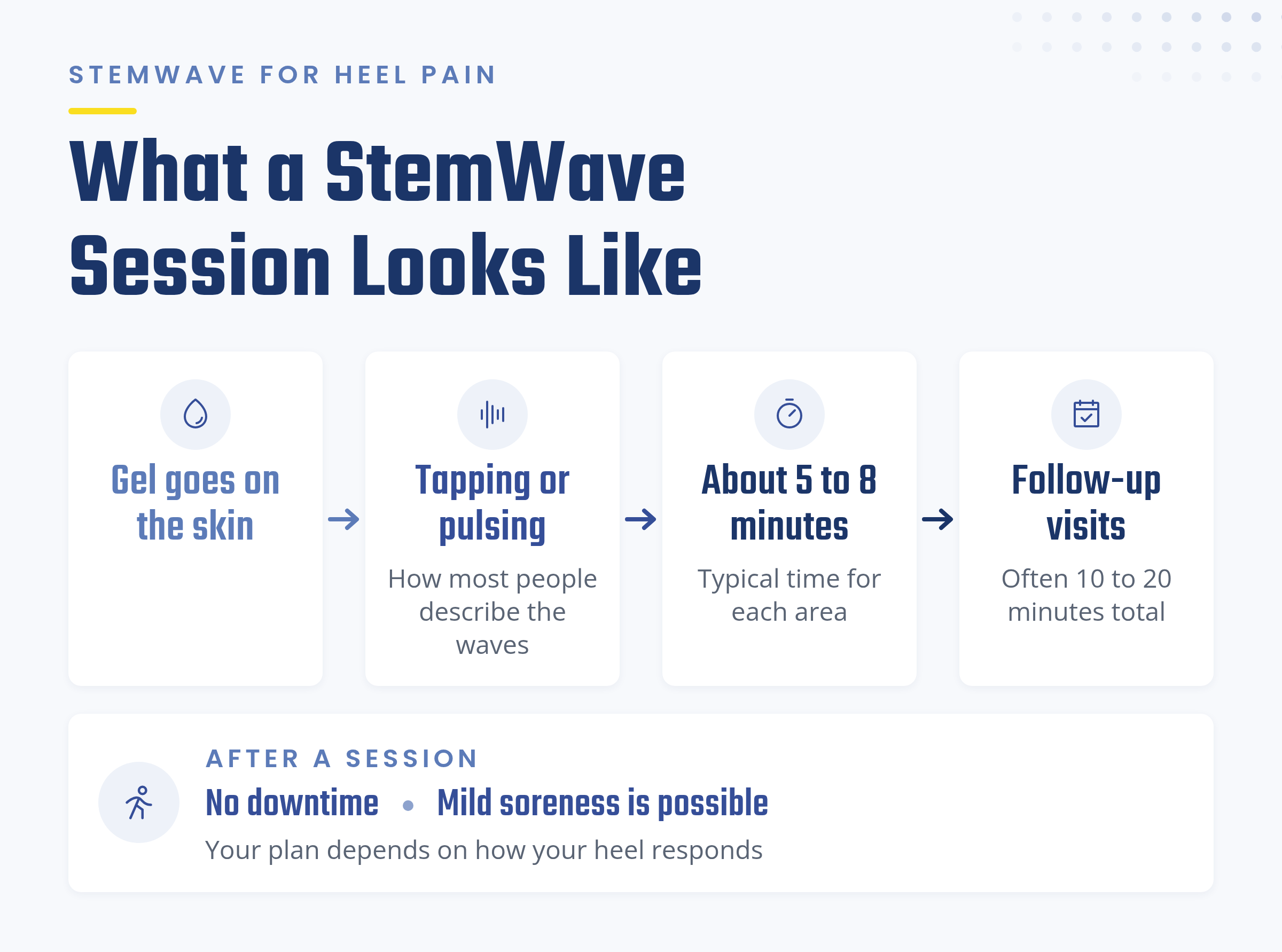
Each treatment area typically takes about 5 to 8 minutes. Gel goes on the skin, and most people describe the waves as tapping or pulsing. Follow-up visits are often 10 to 20 minutes total, with no downtime, though mild soreness afterward is possible.
Your provider will recommend a number of sessions based on how you respond. Research studies used different devices and often fewer sessions, so your plan depends on how your heel responds. See what to expect during a StemWave session and why StemWave care plans have a clear finish line.
Plantar fasciitis is one of several conditions we cover in our guide to the conditions StemWave can help treat. For more on lingering pain, read about focused wave therapy for chronic and acute pain.
Ready to Talk About Your Heel Pain?
Heel pain that lingers for months wears on you, from your morning routine to how far you're willing to walk. Our team at Ozark Physical Therapy will look at your foot, your history, and what you've tried, and we'll be honest about whether StemWave therapy makes sense.
Our StemWave page lists current session options and pricing, including lower rates when it's part of a physical therapy plan or for Wellness and EBO MD members.
Call 573-686-5510 to talk with our team about StemWave treatment in Poplar Bluff.
Frequently Asked Questions
Is StemWave FDA approved for plantar fasciitis?
No. It is FDA-listed as a Class I device for temporary relief of minor muscle aches and pains. Some other shockwave devices have FDA approval for chronic heel pain.
Does a StemWave session hurt?
Most people describe tapping or pulsing. A sore heel may feel tender during treatment, and mild soreness afterward is temporary.
How many StemWave sessions do I need for plantar fasciitis?
It depends on how your heel responds. Your provider will suggest a plan at your first visit and adjust it as you go. Some patients notice changes within the first few sessions, while others improve gradually. Studies on other shockwave devices often used about 3 weekly sessions.
Can I try StemWave therapy if I have diabetes?
Possibly, but talk with your doctor first. Research on shockwave for diabetic feet is limited.
Does insurance cover StemWave?
Coverage varies. Our service page lists self-pay session options, and our team can walk through costs with you.